How Lanikai Loop Parking Changed After the First Month
August 6, 2026
August 6, 2026
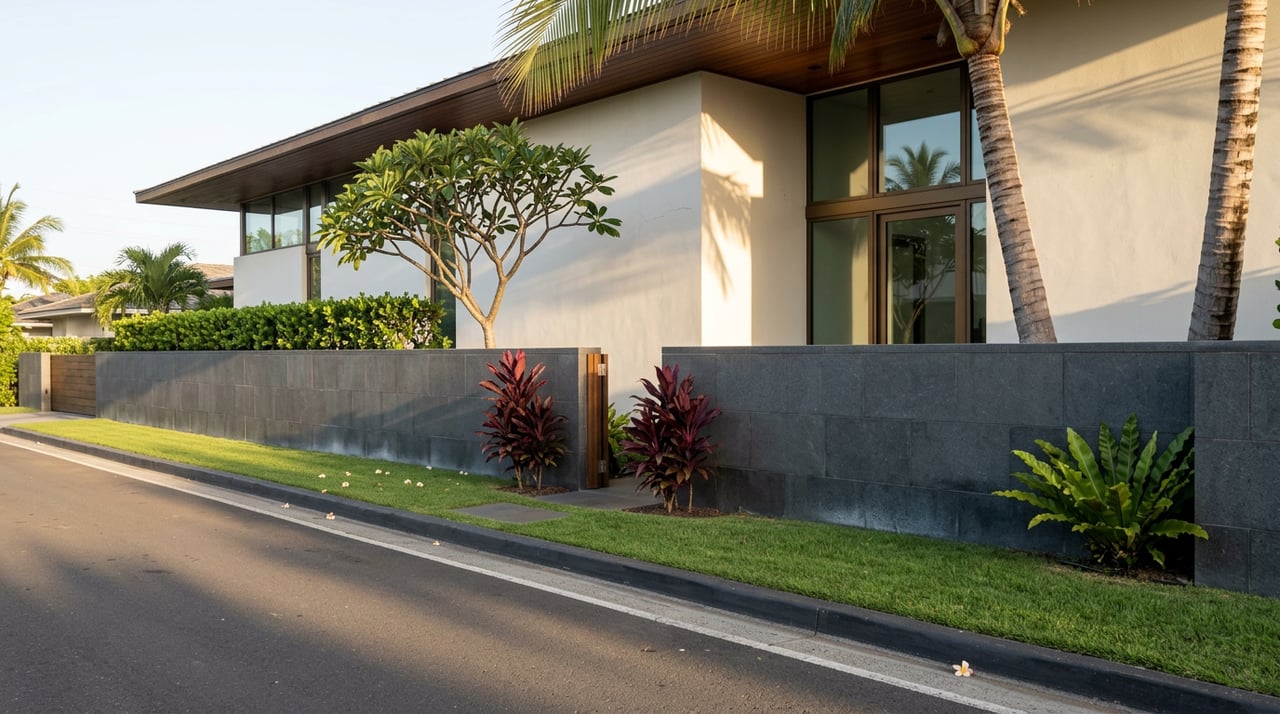
The tell used to be the sound. Car doors on Mokulua Drive at 6:45 a.m., three deep against the hedge, while somebody on the loop tried to back a truck out of a driveway that had quietly become a turnaround. As of July 1, 2026, that sound is gone. What replaced it is a different kind of quiet, and a different set of habits for anyone who lives inside the 2.5-mile loop formed by Mokulua and Aalapapa Drives.
A month is long enough to see the shape of it. Long enough, too, to separate what the Lanikai Transportation Management Plan actually did from what the rumor mill has attached to it.
The finalized plan is narrower than the neighborhood chatter has suggested, and worth reading precisely before assuming what it means for a given block.
Read together, this is not a visitor restriction dressed up as a residential policy. It is a residential policy that visitors will feel most sharply. Honolulu's Department of Transportation Services counted roughly 170 cars parked illegally along the loop on a typical day before the rules took effect. The ban is aimed at that number.
For a homeowner on the loop, the change reads on paper like an enforcement story. Lived from the house, it is a rhythm story. Deliveries arrive without three-way negotiation. Canoe practices at Lanikai Canoe Club start on time. Ambulance access, which residents and paddlers had raised repeatedly at Kailua Neighborhood Board meetings, has stopped being a hypothetical.
The paddling community, which uses the loop earlier than almost anyone, had already tested a version of this world during the temporary holiday-weekend barriers. One member, speaking at a February board meeting, described the arrangement as one that had learned to work for the club, the community, and visitors at the same time. The permanent rules extend that arrangement to Tuesday morning.
None of this changes zoning, shoreline setbacks, or building height. What it changes is the delta between the Lanikai a listing describes and the Lanikai a resident experiences on a Wednesday morning. Those two versions of the neighborhood had drifted apart for the better part of a decade. They are closer together now than they have been in years.
The practical center of gravity has moved about half a mile up the road. Kailua Beach Park's lot is roughly a half mile from the Lanikai beach access lanes, and the walk in climbs a small rise before descending into the loop. For anyone hosting family or a longer-term guest, directing them to park at Kailua Beach Park and walk in is now the default. For guests with rental cars, it is effectively the only option.
Two other arrangements have quietly become more useful:
The three-minute loading zones on Mokulua and Aalapapa are the piece worth understanding correctly. They exist so a grandparent can be dropped at the beach path, or so a cooler can move from trunk to sand without a second trip. They do not exist for parking with the hazards on while a family unloads a week of beach gear over twenty minutes. Enforcement in the first weeks has been oriented around exactly that distinction.
The Ka'iwa Ridge trailhead, at the upper end of Kaelepulu Drive across from Mid-Pacific Country Club, has always shared Lanikai's parking situation. It shares the new rules, too. The short walk from Kailua Beach Park to the trailhead is now a normal part of the hike rather than an inconvenience, and it has an incidental benefit: hikers finish the roughly 1.6-mile round trip, walk down to the beach, rinse the dust off, and end the morning at the same lot they started from. For a trail with a 400-foot climb to the upper pillbox at 565 feet, that loop is more forgiving than the old drive-and-scramble version.
For residents who use the trail as a regular sunrise workout, the practical read is that the early window has become measurably calmer. Once the cross-street 10 a.m. cutoff hits, the trailhead approach thins out on its own.
The loop change has also shifted where residents are eating on either side of a beach morning or a Pillbox climb. Kailua town has absorbed a run of openings over the last eighteen months that suit that pattern.
Faria, which opened in January 2025 as Oʻahu's first Portuguese restaurant, has become one of the more distinctive Windward dining rooms. Chef and co-owner Kawehi Haug describes the menu as Pacifika Portuguese, with a local variation of Portuguese bean soup drawn from her grandmother's recipe and a pao doce that reads as a local take on Portuguese sweet bread. The bacalhau a bras, salted cod in chunks with boiled egg and olives, has emerged as the signature order.
Lilikoi Kitchen moved into a larger Kailua Road location with a grand opening in March 2025, expanded its hours to 9 a.m. to 8 p.m. daily, and added dinner service. The duck-fat fried rice loco moco and the lilikoi vinaigrette are the reasons regulars keep the number saved.
The Well Kailua, at 270 Kuulei Road, opened as a 7 a.m. to 3 p.m. daily café aimed at exactly the audience that used to circle the loop looking for parking. It has become the natural pre-hike coffee stop for anyone taking the Kailua Beach Park approach to Ka'iwa Ridge.
Farther down the loop end, Buzz's Lanikai remains what it has always been, the steakhouse across from Kailua Beach Park with the puffer-fish lighting and the open-faced crab sandwich. The loop change has made its lot, always cramped, easier to read at lunch.
The value of the change is not something the median price will capture cleanly, in part because Lanikai's transaction volume is thin enough that a single sale can move the reported number by a wide margin. A more useful frame is qualitative. A house on Mokulua or Aalapapa in August 2026 is a quieter house than the same address was in August 2025, and the quiet is now baked into ordinance rather than borrowed from a holiday weekend. Owners who have held here for a decade tend to describe the difference in terms most agents cannot put in a listing sheet: morning walks that stay morning walks, canoe practices that start on time, and the ability to receive a package without stepping into traffic.
For sellers, that qualitative shift matters at the top of the market, where buyers are choosing between an idea of Lanikai and the version they can actually walk into on a Wednesday. Those two versions have finally converged.
For buyers watching the loop, the honest read is that the neighborhood has become easier to live in and harder to visit in the same stroke. That is the trade the City Council document codified, and it is the one the first month has confirmed.
If you own on the loop and are weighing what this recalibration means for your position in the market, Cedric Choi and The CHOI Group are available for a confidential home valuation and a discreet conversation about timing. Request a confidential home valuation to begin.
Explore additional stories, insights, and market updates from our team.
Partner with Honolulu luxury real estate leaders for a seamless, results-driven experience backed by global reach.
GET IN TOUCH
ADDRESS 4614 KILAUEA AVE SUITE 201 HONOLULU HI 96816