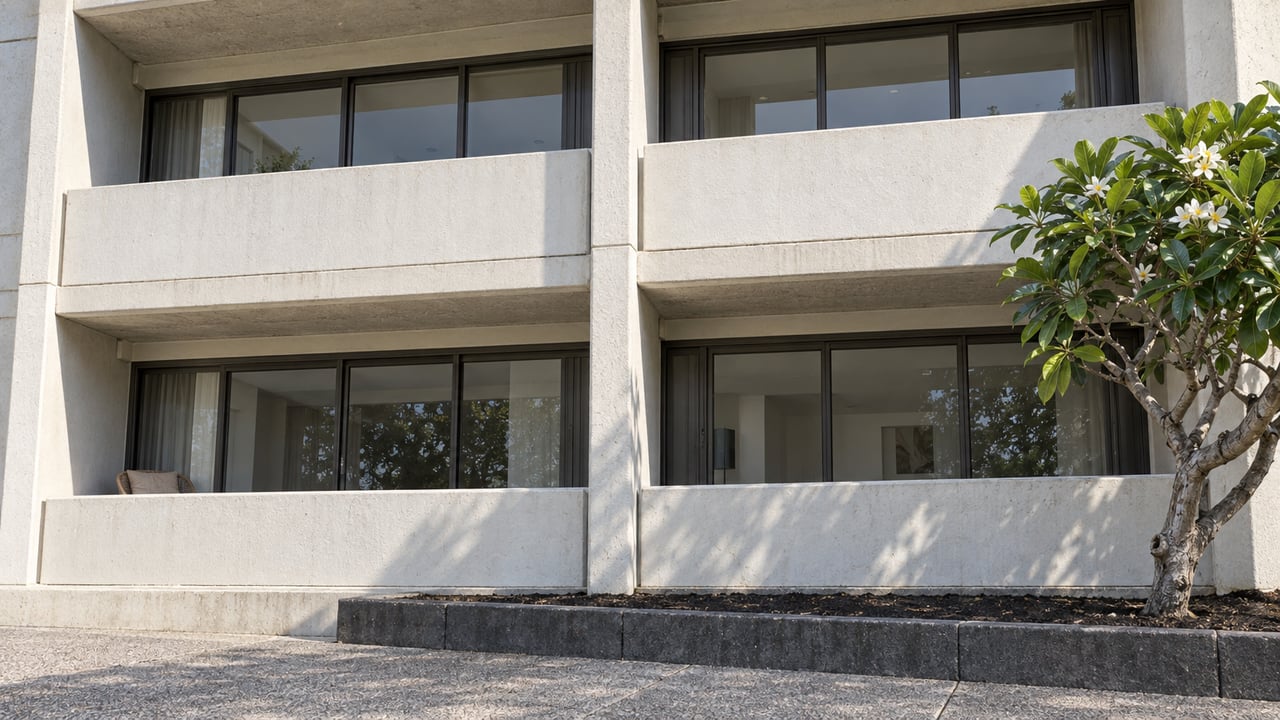
The 2030 Filing Date Inside Every Older Ala Moana Condo Tower
October 8, 2026
October 8, 2026
"It's only going to get more expensive," Sue Savio, president and owner of Insurance Associates Inc., told Honolulu Civil Beat in November 2024. "It really bothers me that we keep pushing the can down the road." The Honolulu City Council was weighing another extension of the city's high-rise fire-safety law at the time. Weeks later it passed one.
Most coverage of that extension focused on the new final deadline of May 3, 2038, set by Ordinance 25-4, a date that sounds far away. For anyone comparing older condo towers along Ala Moana Boulevard and Kapiolani Boulevard, the date that matters is earlier. By May 3, 2030, every affected building owner must meet with unit owners about a design plan, financing options and implementation timelines, then file a statement of intent with the fire department for approval. A buyer closing this year will very likely still own the unit when the association settles how it will comply and how owners will pay for it.
The law dates to the July 2017 Marco Polo fire. In 2018, Honolulu Civil Beat reported that Honolulu required existing residential high-rises to install sprinklers or pass a fire and life safety evaluation. Sprinklers have been required in new high-rise condominiums since 1975, according to the Honolulu Fire Department, so the requirement falls mostly on towers from the post-statehood building boom.
Buildings first had until May 2024 to reach a passing grade. The council added a year because of the pandemic, then added several more months for evaluations and five more years to pass. Bill 55 added eight more years. The council passed it on December 11, 2024, and the mayor approved it on January 3, 2025, as Ordinance 25-4.
The current schedule:
Councilmember Andria Tupola, who introduced a version of the extension, said the 2030 planning requirement was meant to move buildings forward rather than just push the deadline back. For a buyer, the effect is that each association's plan has to be on paper within roughly three and a half years of today.
An association can meet the law in two ways. It can install sprinklers throughout the building, or it can make enough alternative upgrades to earn an acceptable evaluation score. The evaluation looks at items such as emergency power for elevators and the flammability of wall paint.
Few public cost figures exist, and the best-known ones are a few years old. Marco Polo installed sprinklers in 2021 for $6 million, or about $10,500 per unit. At Kahala Towers, the sprinkler estimate reported in 2024 was $4 million to $5 million, or about $17,000 to $21,500 per unit. Kahala Towers also had an estimate of about $2 million for alternative upgrades, and its board had voted unanimously to pursue sprinklers anyway. These are reported historical figures, not current bids, and each building's cost depends on its layout and condition.
There is no city tax relief at the association level to offset these costs. Tupola's Bill 57, which proposed a sprinkler tax credit that associations could apply for, passed first reading in October 2024. The city's records show no further action.
On August 6, 2024, the Honolulu Fire Department reported to the City Council that it had received 303 evaluations. Of those buildings, 23 had an acceptable level of fire safety and 280 were still working with design professionals to get there. That is the most recent building-by-building scoring found. The department's roster of existing residential high-rises, last updated April 24, 2026, still lists these towers with evaluations submitted but does not include scores. A building's status may have changed since 2024, so the table below is a starting point for questions, not a 2026 verdict.
| Building | Acceptable score, August 2024 | Sprinkler intent noted |
|---|---|---|
| 1350 Ala Moana | No | Not marked |
| Ala Moana Tower | No | Not marked |
| Big Surf | No | Not marked |
| Atkinson Towers | No | Not marked |
| Atkinson Plaza | No | Not marked |
| Discovery Bay | No | Not marked |
| Royal Court | No | Not marked |
| The Woodrose | No | Not marked |
| Kapiolani Bel-Aire | No | Yes |
The roster helps explain why the cost per owner varies. 1350 Ala Moana, built in 1969, has 32 floors, 353 units and interior corridors. A large unit count spreads a fixed retrofit cost across more owners. Interior corridors matter because the ordinance exempts buildings where every unit has exterior access and a continuous egress path to exit the building, and there are no full-length interior corridors. Some upgrades are already done. Residents of The Woodrose, near Ala Moana Center, credited a recently installed alarm system with alerting them during a 2023 fire in which no one was injured.
The ordinance includes a provision buyers will meet directly at the transaction stage. Associations of buildings 10 floors or taller may opt out of sprinklers if they achieve an acceptable evaluation score through alternative systems. An association that opts out must give verifiable disclosure of that decision to current and future owners and residents, including in real estate sales disclosures.
The cost of compliance therefore becomes part of the purchase file in one of two ways. A building that chooses sprinklers must file a financial and design plan by 2030, which is a document that can be requested. A building that opts out records that choice in disclosures that follow the unit to every later buyer. A building that has done neither is a decision still pending, and the owner at the time will share in paying for whatever the association decides.
Oʻahu's condo numbers show buyers taking their time. In August 2026, condo resales fell 6.6% from a year earlier to 365, and the median price slipped 1.0% to $510,000. The single-family median rose 12.2% to $1,240,000 over the same period. Active condo listings rose 4.1% to 2,512. Condo sellers received a median 97.1% of their original asking price, and only 10% of condo sales closed above it.
The Honolulu Board of REALTORS® explained the gap in its August 2026 report. "Single-family buyers are largely weighing the purchase price, while condo buyers are also looking at maintenance fees, insurance and reserve funding as part of the monthly cost of ownership," Tangonan said. "Those carrying costs shape what condo buyers are willing to pay. Sellers who price realistically from the start and are upfront about their building's financial position have generally seen stronger results."
The fire-safety plan adds to costs that are already rising. Hawaii Business reported in June 2026 that the average Oʻahu condo maintenance fee was $1,051 in its February snapshot, up 70% over the prior decade. It listed sprinkler installations alongside old pipes, concrete spalling, elevator modernization and roofs as the costly projects that push fees up and lead to assessments. Insurance has moved in both directions. A 44-story urban Honolulu condo saw its hurricane premium fall from $266,000 to $143,000, and the reopened Hawaiʻi Hurricane Relief Fund had written 98 policies by early March 2026.
In a market where buyers already price fees, reserves and insurance, an unresolved fire-safety plan is one more carrying cost they will factor in. Sellers in towers with a filed plan, a funded reserve line or completed upgrades can show it. Sellers in towers that have not decided are asking buyers to accept an unknown.
These requests apply to any older tower and can be raised during due diligence:
Does the 2038 deadline mean nothing happens until then? No. Under Ordinance 25-4, each owner must meet with unit owners and file a plan and statement of intent by May 3, 2030, and the fire department must respond within 60 days.
Are newer Kakaako towers affected? The requirement applies to existing high-rises without sprinklers. Sprinklers have been required in new high-rise condominiums since 1975.
Can an association challenge its evaluation score? Yes. An association may file a written appeal within 45 days of the completed evaluation or the fire department's determination, whichever is later.
If you own in an older Ala Moana tower and want to know how your building's fire-safety status and 2030 plan affect what your unit would sell for, The CHOI Group offers a private review. Request a confidential home valuation.
This article is general information, not legal, tax or financial advice. Consult a qualified professional about your situation.
Explore additional stories, insights, and market updates from our team.
Partner with Honolulu luxury real estate leaders for a seamless, results-driven experience backed by global reach.
GET IN TOUCH
ADDRESS 4614 KILAUEA AVE SUITE 201 HONOLULU HI 96816