The Honolulu Marathon Circles Diamond Head Twice, and Hawaiʻi Is Its Largest Group
November 12, 2026
November 12, 2026
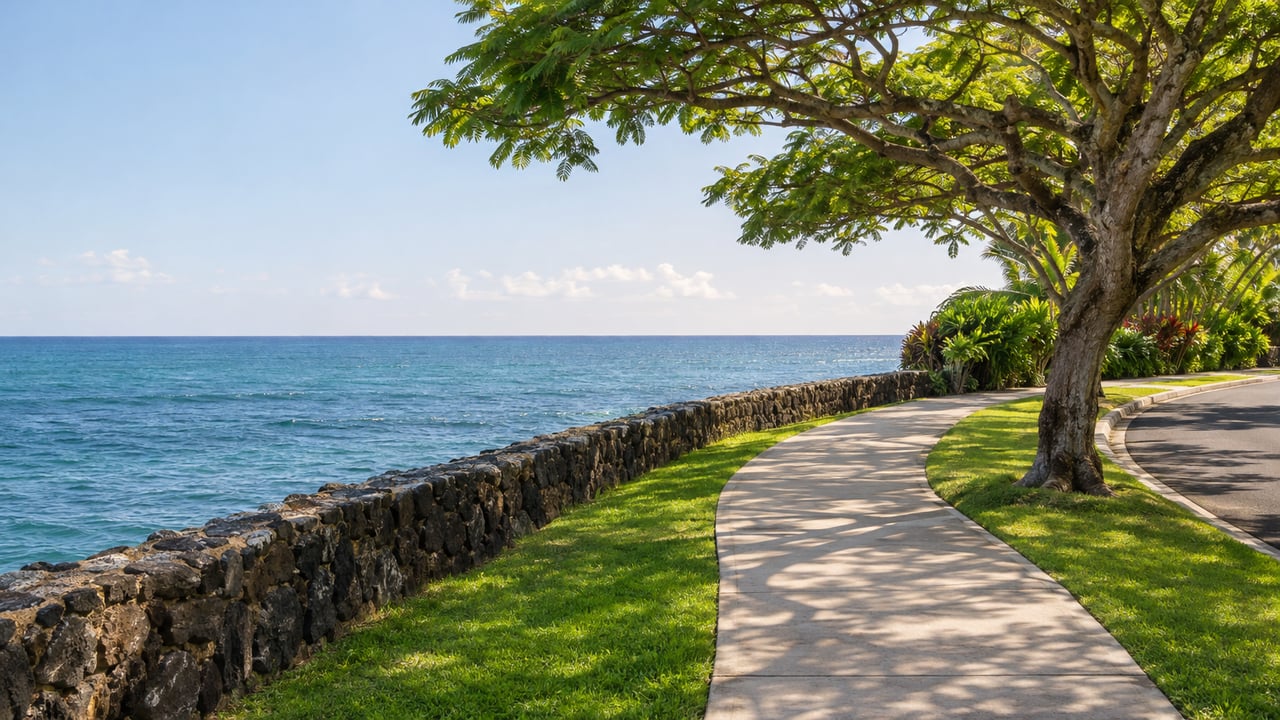
On Sunday, December 13, shuttles start leaving the Honolulu Zoo for the start line at 2 a.m., three hours before the JAL Honolulu Marathon begins. The race starts at 5 a.m. About an hour of darkness later, the first runners turn onto Monsarrat Avenue. Hours after that, the last of them are still coming down Diamond Head Road toward the Kapiʻolani Park Bandstand. No other neighborhood on the course gets the race at both ends of the day.
The people on that road have also changed. In 2025, Hawaiʻi residents made up the largest of the three groups the race tracks, ahead of runners from the continental U.S. and from Japan. As registrations for 2026 build toward a record, many of the people running past Diamond Head on race morning are from Oʻahu.
The Honolulu Marathon Association's 2026 course description brings runners into the neighborhood twice.
The first pass comes in the early morning, with the full field still packed together. The second comes after more than 20 miles, when the field has spread out and runners are spaced by pace. With no course cutoff, walkers are welcome in the marathon. That second pass therefore continues long after the leaders have finished.
For years, the race's identity was tied to Japan. The association's entry statistics show how much that has shifted.
| Year | Total weekend entrants | Entrants from Japan | Japan share |
|---|---|---|---|
| 2019 | 33,255 | 16,355 | 49.2% |
| 2023 | 28,637 | 9,168 | 32.0% |
| 2024 | 36,121 | 10,338 | 28.6% |
| 2025 | 42,962 | 11,984 | 27.9% |
The number of entrants from Japan in 2025 was still well below 2019, even though the overall field was nearly 10,000 larger. In November 2024, Honolulu Marathon CEO Jim Barahal told the Honolulu Star-Advertiser that the yen-to-dollar exchange rate had made the trip more expensive for Japanese entrants, and that mainland entrants were skewing younger.
Local runners filled much of the gap. The 2025 economic impact report counted more than 15,250 Hawaiʻi residents among 42,793 participants. That compared with more than 13,250 from the continental U.S. and about 12,000 from Japan. The same report names the mainland as the fastest-growing core market, up about 44% since 2023. Hawaiʻi still has the largest single group.
The 2026 figures continue the trend. As of October 8, 2026, the association's media center listed 14,531 Hawaiʻi entrants and 24,716 visiting entrants across the weekend's events. It said participation was pacing about 20% ahead of 2025, with the 20-to-39 age group leading growth from both Hawaiʻi and the mainland. Two months before race day, local registrations were already within about 700 of the 2025 resident count.
The 2025 race went ahead in the rain. KITV reported 32,034 marathon starters, with Tsegay Weldibanos of Eritrea and Calli Hauger-Thackery of Britain winning. Hawaii News Now reported that Hauger-Thackery won in 2:30:44, the first British woman to win the race, and that 40,000 malasadas were handed out at the finish.
With a field this large, the race takes more than one morning. Most of the weekend's public events are within walking distance of Kapiʻolani Park or a short drive into Waikīkī.
The Saturday mile overlaps with the regular KCC Farmers Market. The market runs 7:30 to 11 a.m. in Kapiʻolani Community College Parking Lot B, and December 12 is on its posted calendar. For people living between the two events, the morning has a race at the bottom of Monsarrat and the market at the top.
Neighbors running on Sunday will find the start area set up differently. The association's start-line page says access is from Piikoi Street, from the back entrance off Atkinson Drive, or from the Waikīkī side, not from in front of the start line, citing new security measures. Strollers are allowed only in the Start to Park 10K. Pets are not allowed in any event.
The 2025 traffic advisory shows how the City handled these streets on race morning. Traffic controls began at 12:30 a.m., roads reopened gradually as runners cleared them, and tow-away zones applied from midnight to 5 p.m.
| Street | 2025 race-morning arrangement |
|---|---|
| Kalākaua Avenue | Detoured onto Kūhiō from 3:30 a.m.; mauka side closed between Monsarrat and Poni Moi from 4:30 a.m. until the marathon ended; makai side to open two-way around 9 a.m. for resident traffic only |
| Monsarrat Avenue | Restricted to tour-bus pickups from 4:30 a.m. to 3 p.m. |
| Paki Avenue | Local traffic only from 4:30 to 9 a.m. |
| Diamond Head Road, Kahala Avenue, Kealaolu Avenue | Controlled by HPD until runner volume allowed vehicles to move safely |
| Kalanianaʻole Highway | Makai side restricted from Ainakoa to Hawaiʻi Kai Drive, 3:30 to 8:30 a.m., with mauka-side contraflow |
The 2025 advisory also named specific destinations. Outrigger Canoe Club and Elks Club patrons were directed to use Kapahulu. Traffic for Kahala Towers, The Kahala Hotel & Resort and Waialae Country Club was to be let through via Aukai Avenue and Pueo Street when it was safe, at approximately 11:30 a.m. The second pass around the crater explains the long Diamond Head Road closure. The road is used by the earliest runners heading out and again by the slowest finishers heading in.
Race-day traffic notices appear on the association's Traffic Advisory page, and the 2026 times there apply to this year's larger field.
The association names Diamond Head Road and the Kapiʻolani Park finish as popular places to watch. Its route also passes Cliffs and the Diamond Head Lighthouse in the last mile. If you live on the mauka side, the first pass is the one to see in the dark, when the whole field comes around the crater close together. The second pass lasts much longer, as finishers come back from Kahala Avenue in a steady line past the lighthouse.
There are 16 aid stations along the course. The association's 2025 report estimated $454.47 million in economic output on Oʻahu from the weekend, using event data and DBEDT figures. More and more of the field comes from the island. This year, the people coming around Diamond Head toward the finish include a growing number of Oʻahu neighbors.
For homeowners on Diamond Head Road, Kahala Avenue and the streets around Kapiʻolani Park, marathon Sunday shows how closely a property's daily access is tied to the life of the neighborhood around it. The CHOI Group advises owners along this route with the same care for timing and logistics. Request a confidential home valuation whenever you would like a quiet conversation about your property.
Explore additional stories, insights, and market updates from our team.
Partner with Honolulu luxury real estate leaders for a seamless, results-driven experience backed by global reach.
GET IN TOUCH
ADDRESS 4614 KILAUEA AVE SUITE 201 HONOLULU HI 96816