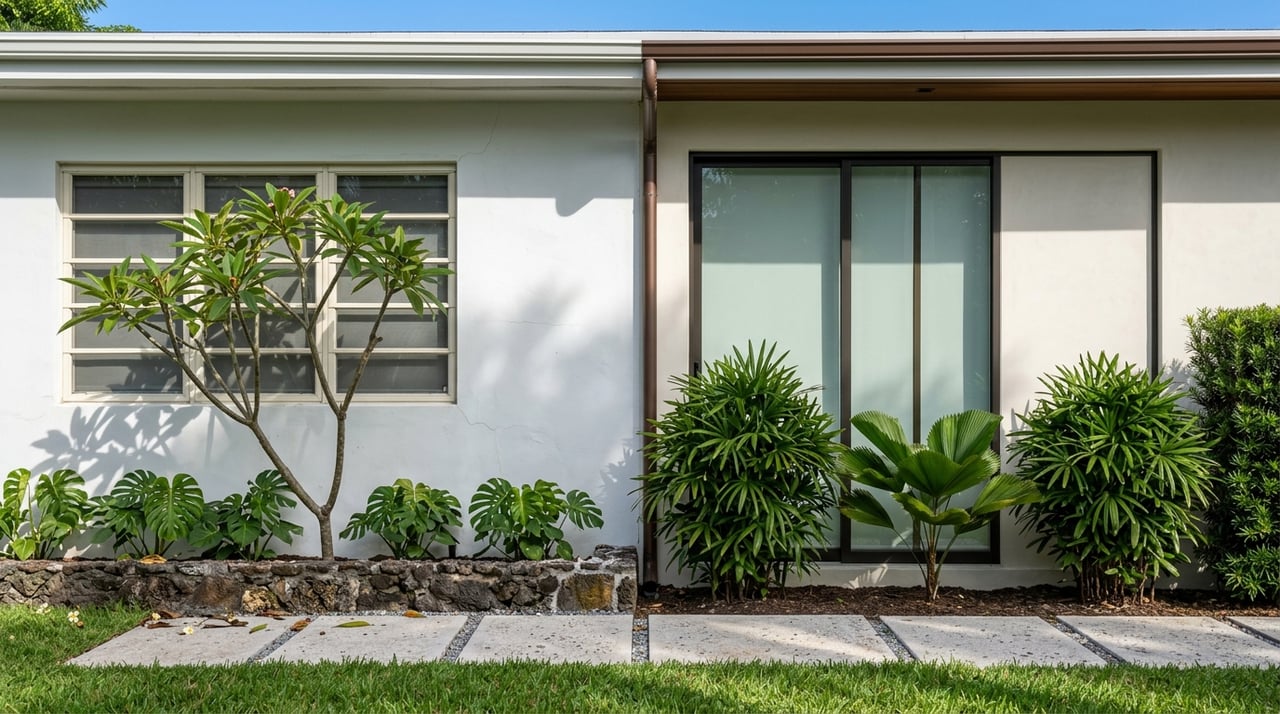
Kahala Luxury Homes: When To Remodel And When To Rebuild
July 9, 2026
July 9, 2026
Thinking about transforming a Kahala property? In Waialae and Kahala, the biggest question is often not what you want to change, but whether the home should be remodeled or rebuilt at all. That decision can affect your design options, permit path, timeline, and future resale position. If you own a luxury home near the coast, this guide will help you weigh the key factors before you commit. Let’s dive in.
In Waialae and Kahala, remodel-versus-rebuild decisions carry more weight than they might in an inland neighborhood. Coastal rules, shoreline setbacks, flood considerations, and site conditions can quickly change what looks simple on paper.
For luxury homeowners, the stakes are also financial. Major work in this part of Honolulu can tie up significant capital, and even the broader Oʻahu detached-home market posted a rolling 12-month median single-family price of $1.14 million in February 2026. In Kahala, where properties are often far above that figure, getting the scope right from the start matters.
The first question is whether the current home still gives you a sound, compliant shell worth keeping. If the foundation, framing, and overall footprint are workable, a remodel may be the more efficient path.
In general, remodeling tends to make sense when most of your budget is going toward finishes, systems, or selective reconfiguration. If you can improve livability without replacing major structural elements, you may preserve time, reduce complexity, and keep more of the original home in place.
A rebuild usually becomes more compelling when the home is nonconforming, the design requires major structural replacement, or the current envelope cannot support your plan without creating more code issues. In those cases, trying to save too much of the old structure can lead to expensive compromises.
For shoreline-area properties, Honolulu draws an important line between repair and reconstruction. Reconstruction is triggered when a licensed engineer or architect values the work at 50 percent or more of current replacement cost, or when major structural elements are being replaced.
Repairs are work below that threshold and do not enlarge the structure. That means a project that begins as a remodel can shift into reconstruction territory if the scope grows or if structural work becomes more extensive than expected.
This is one reason early planning matters so much in Kahala. Before you finalize a design direction, it helps to understand whether your intended work will still be treated as a repair or whether it will be reviewed as reconstruction under Honolulu’s shoreline-setback rules.
A remodel is often the better fit when the home’s core structure is still doing its job and your goals are more about modernization than reinvention. In Kahala, that can include improving interior flow, updating aging systems, or refining finishes to better match today’s luxury expectations.
You may also prefer remodeling if you want to preserve part of the property’s character while improving comfort and function. For long-term occupancy, this can be appealing when the lot already works well and the house simply needs smarter planning and better systems.
Common reasons a remodel may work:
A rebuild is often the clearer path when your goals cannot be achieved within the current shell. If the home needs major structural replacement, has nonconforming issues, or sits on a site where elevation and compliance problems are central, starting fresh may be more practical.
For eventual resale, a rebuild can also create a more cohesive result. In a luxury coastal market, buyers often respond well to homes with modern systems, clear compliance, and a layout that feels intentionally designed for the lot.
A rebuild may be the stronger option when:
Sometimes the smartest answer is neither a full remodel nor a full rebuild. A hybrid approach can mean keeping the parts of the home that are structurally and legally efficient while replacing the parts that are outdated or too costly to salvage.
This is not a formal city classification, but it is a practical way to think about scope under Honolulu’s repair and reconstruction framework. For some Kahala properties, the hybrid path can reduce waste while still delivering a meaningful upgrade.
On coastal Kahala parcels, shoreline rules can shape the project before design choices even begin. Honolulu’s shoreline-setback ordinance establishes a 60-foot setback in the Primary Urban Center area after July 1, 2024, with a 60-foot setback plus an erosion-rate factor in some other areas, and a minimum adjusted setback of 40 feet.
The city also requires the shoreline and setback line to be marked on the ground before grubbing, grading, or construction starts. If your property falls within this framework, those site realities can heavily influence whether it makes sense to adapt the existing home or begin again with a different plan.
There is another complication for nonconforming structures. Honolulu places added limits on nonconforming structures in the shoreline setback area, and reconstruction there can require a variance. That can make a rebuild more involved, but it can also make an oversized remodel less efficient if it triggers reconstruction anyway.
If the parcel lies in a Special Management Area, the SMA permit is the first permit required for development there. No agency may authorize development until SMA approval is in place.
In practical terms, this means you should confirm the property’s regulatory status before investing too deeply in plans. In Waialae and Kahala, where coastal parcels can involve layered review, early diligence helps you avoid expensive redesigns later.
Elevation is one of the most important remodel-versus-rebuild variables on many coastal lots. If a proposed structure is in a Special Flood Hazard Area, Honolulu requires the finished lowest floor to be at least 3 feet above the FEMA base flood elevation.
If the structure is outside the Special Flood Hazard Area but inside the sea level rise exposure area, the lowest floor must still be at least 3 feet above the highest adjacent grade. Those requirements can be difficult to solve with a simple remodel, especially if the existing structure sits too low.
That is why flood status should be verified early. FEMA’s Flood Map Service Center is the official source for NFIP flood-hazard information, and current map status can affect the permit path and the design strategy.
On tight coastal sites, some owners assume armoring can create an easier building solution. Honolulu’s code treats new shoreline hardening cautiously, and in the reduced-buildable-area scenario, new shoreline hardening is not allowed.
Honolulu’s coastal-hazards guidance identifies seawalls, revetments, groins, bulkheads, and similar measures as shoreline hardening. In short, shoreline armoring is not something you should count on as a simple workaround for a constrained Kahala lot.
Even a straightforward-sounding project can involve more process than expected. Honolulu’s Department of Planning and Permitting states that additions require building permits, and new construction or renovation of single-family and two-family detached dwellings goes through the building-permit process.
Projects in flood zones generally need a Building Permit with plans. Instant Online Building Permits are generally limited to single-family properties that are not in a flood zone and not under advisories or violations.
Honolulu also offers OTR-60, an optional one-cycle review path for certain single-family and two-family new construction and renovation projects submitted through ePlans. However, it is not available for flood-zone projects.
For site-intensive coastal work, the Site Development Division may also be involved with grading, trenching, drainage, driveway and access issues, and work in city rights-of-way. That is one reason rebuilds often require more coordination than limited remodels.
Permit fees are based on the total fair market value of labor and materials. Separate building permits and fees are generally required for each structure, and adding new scope after permit issuance requires another permit.
For luxury projects, this makes scope control a real strategy, not just a construction detail. If your wish list is still evolving, a disciplined pre-planning phase can help you decide whether it is better to remodel within a tight scope or commit to a rebuild with clearer intent.
If you are weighing a personal renovation before a future sale, owner-builder status deserves caution. Honolulu states that the exemption is for personal use, and the property may not be offered for sale or lease in whole or in part within one year after completion.
Plumbing and electrical work still must be done by licensed contractors. If resale timing matters, this rule alone may make owner-builder less attractive than it first appears.
If you plan to stay long term, remodeling can be attractive when the home already suits the lot and your goals center on comfort, preservation, and updated systems. That path can allow you to retain familiar character while making the property function better for daily life.
If resale is part of the plan, a rebuild can offer a cleaner market story. Buyers in a coastal luxury segment often value modern systems, elevation readiness, and a home that feels thoughtfully resolved from the outset.
In either case, the best decision usually comes down to how well the existing structure aligns with the lot, the code framework, and your long-term goals. In Kahala, style matters, but compliance and site logic matter just as much.
If you are weighing a major property decision in Waialae or Kahala, a discreet, well-informed strategy can save time and protect value. For confidential guidance on how a remodel or rebuild decision may affect positioning, timing, and eventual resale, connect with Cedric Choi.
Explore additional stories, insights, and market updates from our team.
Partner with Honolulu luxury real estate leaders for a seamless, results-driven experience backed by global reach.
GET IN TOUCH
ADDRESS 4614 KILAUEA AVE SUITE 201 HONOLULU HI 96816