What The Portal Median Misses About Buying On Hawaii Loa Ridge
August 6, 2026
August 6, 2026
A buyer who has been watching Hawaii Loa Ridge from a browser tab in Tokyo or San Francisco usually arrives with one number in mind. The listing sites show an average sold price around $4.07M and a median list closer to $4.54M as of mid-2026, with days on market stretching between 145 and 179 depending on which brokerage feed you read. Those figures are accurate. They are also the least interesting thing about buying on the ridge.
The interesting mechanics sit behind the gate, inside a set of association documents that most buyers do not read until escrow is open. They govern what you can build, how long you have to finish it, when your contractor's truck must be off the property, and what the resale spread looks like between a house that respected those rules and one that did not. Once you understand them, the price gap between two otherwise similar homes on Ikena Circle stops being a mystery.
Across Oahu, June 2026 was a record month. The island's single-family median hit $1,262,500, homes moved in a median of 14 days, and more than one in three sales closed above asking. The luxury tier told a more selective story. The Q2 2026 Oahu luxury median settled near $2.95M, and Hawaii Life's second-quarter report specifically named Hawaii Loa Ridge among the pockets where sales above $2M held their footing. April's islandwide luxury data from Caron B Realty showed 33 closings, a median of $2,365,000, and price cuts on 42.4% of sales. That last figure is the one to sit with. Nearly half of luxury sellers had to move off their first number.
Now compare that to the ridge's own snapshot: average sold price roughly $4.07M, average $/sf around $1,116, and days on market in the 145 to 179 range. A luxury enclave where homes take five to six months to trade, in a market where the broader island moves in two weeks, is telling you something about friction. The friction is not demand. It is the cost and calendar of getting a home ready to sell, and both of those are set by the association, not the MLS.
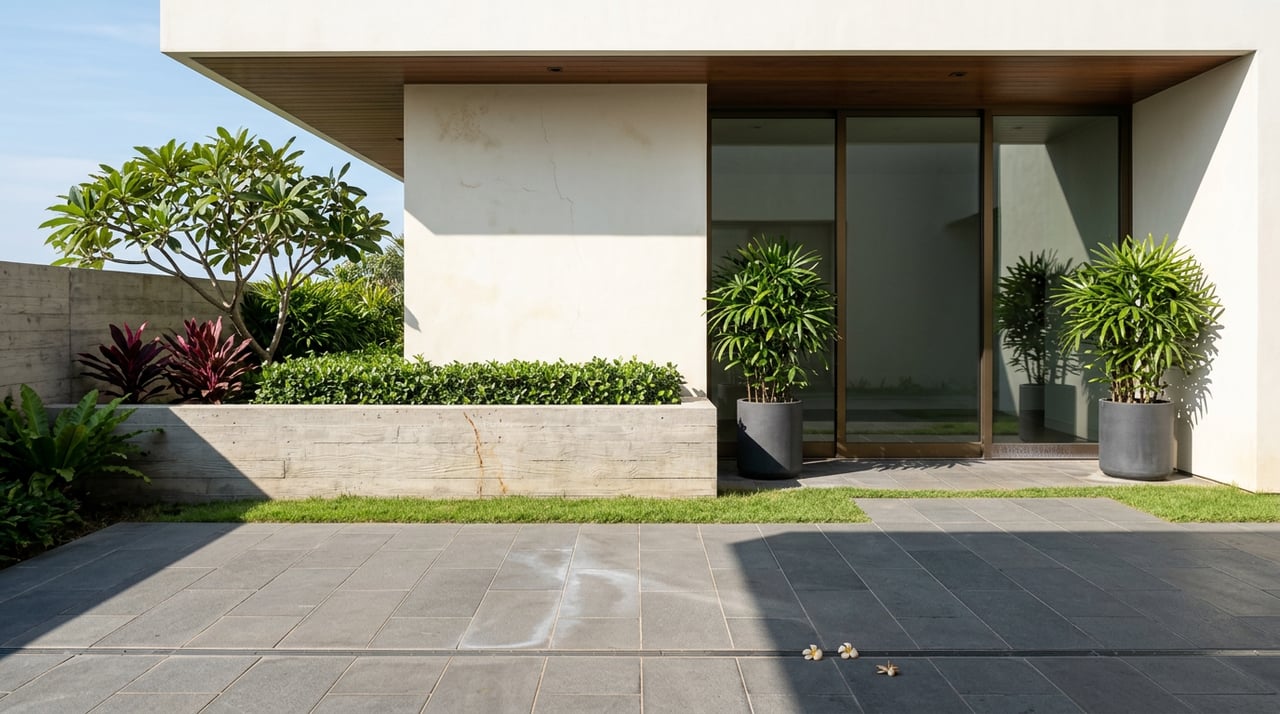
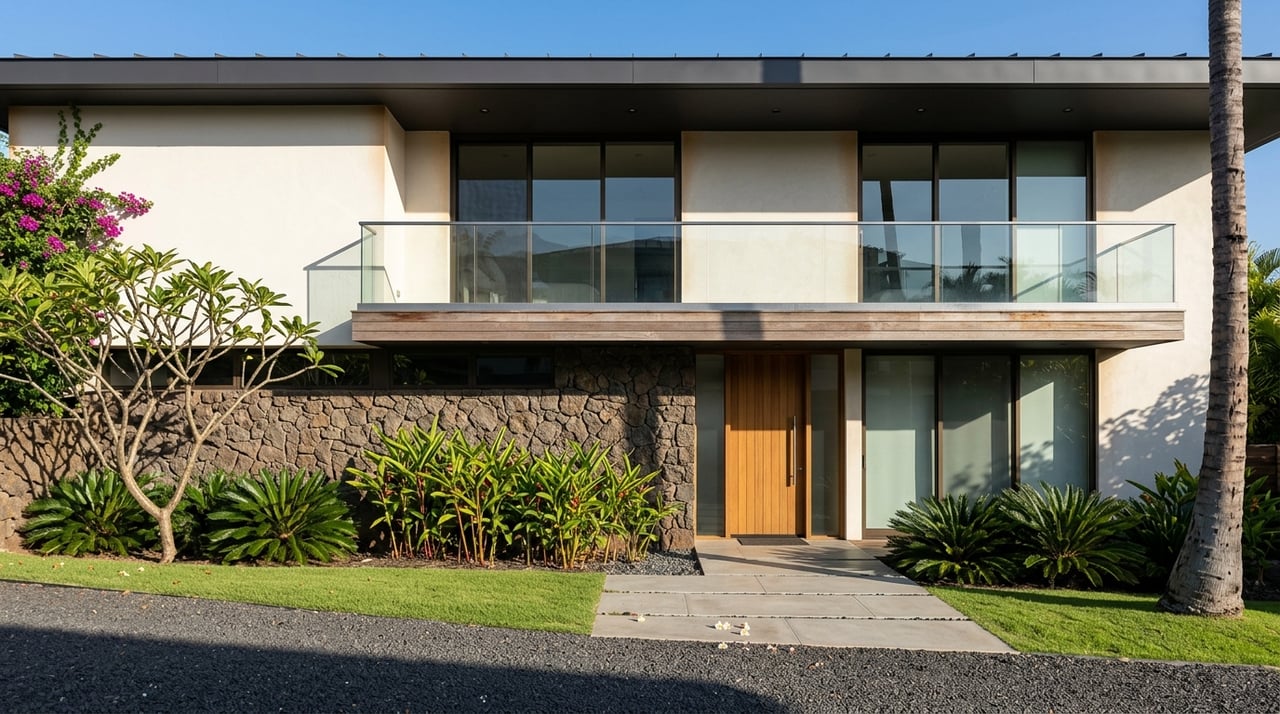
The 24-hour guard at the entrance is the ridge's public face. The Architectural Review Committee is its underwriting desk. Any material change to a home, from a re-roof to a full teardown, runs through the ARC before a permit is pulled. The committee levies review fees, sets design standards, maintains an approved canopy tree list, and even pre-approves mailbox designs. For a buyer planning to renovate on close, this is where the schedule and the budget actually get written.
| ARC and construction reality | What the rule says | What it means for a buyer |
|---|---|---|
| Design review | Plans must be approved by the ARC before work begins | Add three to six months to any renovation calendar |
| Completion window | Owners have 18 months to finish a new home once construction starts | Speculative flips are structurally difficult; carry costs compound |
| Construction hours | Monday to Friday 7:00 AM to 5:30 PM, Saturday 9:00 AM to 5:30 PM, crews off the ridge by 6:00 PM weekdays and 5:30 PM Saturdays | No night pours, no Sunday work, no weekend acceleration |
| Contractor insurance | $2M aggregate and $1M per occurrence liability minimums | Small unlicensed operators are effectively excluded |
| Access | Contractor vehicles removed nightly; no use of the Ridge Club or park by crews | Every project needs its own laydown discipline |
These are not municipal rules that also happen to apply here. They are private covenants layered on top of city permitting, and they bind whoever holds title. A buyer who assumes an Oahu-standard renovation timeline will run into the ARC before the first demolition day.
The completion window is the mechanism most likely to move a number on your offer. When an owner starts a new home on the ridge, the association gives them 18 months to finish it. Combine that with construction hours that top out at roughly 52 hours a week and a design review that must clear before ground breaks, and the incentive structure for pure speculation collapses. You can still buy a tear-down lot, but you have to underwrite it as a real project with your own end-use, not as a two-year hold.
This is why the ridge's average days on market runs long even in a hot island cycle. Sellers who kept up with ARC-approved landscaping and finishes find buyers relatively quickly. Sellers whose homes read as deferred maintenance have to price for the buyer's construction calendar, not the buyer's move-in date. That gap between a turnkey ridge home and a project home is wider than the equivalent gap in Kahala or Diamond Head, because the ridge's rules make the project side genuinely slower and more expensive to execute.
The interpretation matters more than the raw number. On a $4M purchase, six months of additional carry on financing, taxes, and holding is real money. It also explains the April 2026 luxury pattern, where 42.4% of Oahu luxury sellers cut price and the ones who did saw quicker closings at firmer $/sf. On the ridge, the cut usually reflects the buyer pricing in the ARC calendar.
Inside the main HLROA boundary sits The Pointe, a second gated enclave that started building in 1997. Homes there run 2,679 to 9,309 square feet, and the community has its own clubhouse and tennis courts in addition to the main ridge amenities. Recent listings inside The Pointe have included work from architects like Jim Schmitz. The pricing premium relative to the outer ridge is not simply about the second gate. It is about the smaller pool of homes, tighter architectural coherence, and the fact that resale comparables inside The Pointe stay inside The Pointe. When a buyer asks why two homes with similar square footage price hundreds of thousands apart, the answer is often on which side of the inner gate they sit.
One place where state law overrides the ARC is solar. Under HRS section 196-7, no covenant, declaration, bylaw, or rule can prevent a single-family homeowner from installing a solar energy device, and any provision to the contrary is void. Private communities may adopt reasonable placement rules, but they cannot effectively block a system. For a ridge buyer thinking about a PV array on a south-facing roof, the takeaway is that the ARC has real authority over how the panels are placed, and none over whether they can exist. That is a useful thing to know before you write your offer contingent on an energy plan.
For sellers, the resale implication runs the other direction. Because the ARC controls exterior finishes, roof profiles, and landscaping down to the canopy tree list, homes on the ridge age in a more coordinated way than most Honolulu neighborhoods. That is good for the pricing of well-maintained homes and hard on the pricing of homes where owners deferred upkeep across a decade. The next buyer inherits both the property and the compliance backlog.
Is Hawaii Loa Ridge fee simple or leasehold? The single-family homes on the ridge are fee simple. Confirm current title on any specific property through the preliminary title report during escrow.
Can I short-term rent on the ridge? Association rules and City and County of Honolulu ordinances both bear on this. Short-term rental use on the ridge is heavily restricted in practice, and any buyer counting on STR income should verify with counsel and the association before removing financing contingencies.
How does the ridge compare to Kahala for a renovation buyer? Kahala imposes no association-level design review, so renovation calendars there track city permitting alone. On the ridge, the ARC layer typically adds three to six months and its own fee structure. That difference is often the deciding factor for buyers choosing between the two.
If you are weighing an offer on Hawaii Loa Ridge or preparing to bring a ridge home to market, the calendar behind the gate is worth mapping before the number on the contract. Cedric Choi and the CHOI Group at Hawai'i Life work these transactions with the ARC file open on the desk. Request a confidential home valuation to see what your position looks like against current ridge comparables.
Explore additional stories, insights, and market updates from our team.
Partner with Honolulu luxury real estate leaders for a seamless, results-driven experience backed by global reach.
GET IN TOUCH
ADDRESS 4614 KILAUEA AVE SUITE 201 HONOLULU HI 96816