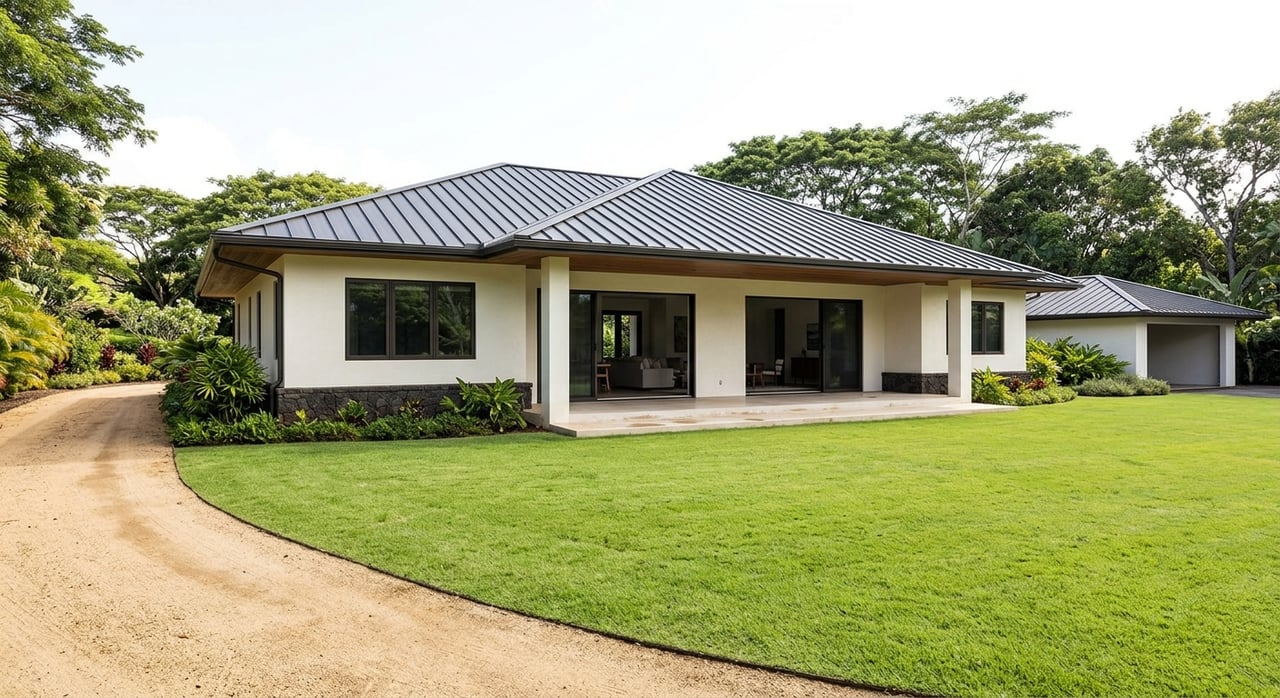
Central Oahu Land and Estates for a Long-Term Hold
April 16, 2026
April 16, 2026
Looking for land in Central Oʻahu that you can hold with confidence for years, not just flip on a short timeline? In Wahiawa and the broader 96786 area, estate-size parcels can appeal to buyers who value space, flexibility, and long-range planning. The key is understanding that this market is shaped as much by land use, infrastructure, and carrying costs as by size alone. Let’s dive in.
The 96786 ZIP code is Wahiawa, and city planning materials place Wahiawa and Whitmore Village within the Central Oʻahu basin. The area sits inside a broader regional framework, not an isolated submarket, which matters when you are evaluating land over a long time horizon.
Just as important, Central Oʻahu is not being positioned as a blank-slate growth corridor. The city’s long-range planning for the region focuses on sustaining area character, directing much of future residential growth toward master-planned communities within an Urban Community Boundary and redevelopment near Waipahu transit nodes, according to the Central Oʻahu planning context. For you, that means a large parcel’s long-term value may depend more on its existing land-use fit and practical utility than on any assumption of broad rezoning.
In Central Oʻahu, larger parcels often align more closely with low-density residential, country, or agricultural land patterns than with high-density development. That distinction matters because each category comes with a different set of expectations for use, improvements, and future flexibility.
Honolulu’s Land Use Ordinance states that the Country district is intended to preserve open-space or rural character, allow some agricultural uses and low-density residential development, and rely on basic public services rather than full urban standards. In practice, that can make country-zoned land attractive for buyers seeking privacy, scale, and a more rural holding strategy.
Agricultural parcels require even closer review. Under Honolulu’s revised Article 5 agricultural rules, AG-1 allows no more than one farm dwelling per 5 acres, while AG-2 allows no more than one per 2 acres. Farm-dwelling use is also tied to active crop or livestock production on at least half of the lot area.
That means not every large parcel should be viewed as a simple future homesite. Depending on zoning and use, your property may function best as a legacy land hold, an active agricultural asset, or a low-density residential estate play with limited development intensity.
If you are considering a long hold in Wahiawa, it helps to recognize that agriculture remains part of the region’s economic and policy identity. This is not only about history. It is also reflected in current public investment and land-use thinking.
The Hawaii DBEDT Agribusiness Development Corporation says the Central Oʻahu Agriculture and Food Hub Project is intended to revitalize agriculture in Wahiawa through long-term leases, facility retrofits, and support uses that can reduce transport costs. For long-term buyers, that signals an important point: some land in this area may hold value because it remains productive, usable, and relevant within an agricultural framework.
One concern buyers often have about inland estate-size property is whether service capacity will support ownership over time. In Central Oʻahu, the infrastructure picture is more established than some assume.
The Honolulu Board of Water Supply reports that Oʻahu’s potable water comes from groundwater and that the Central Oʻahu watershed system includes 34 active potable well stations and 56 potable reservoirs. For large-parcel buyers, that is a meaningful regional strength when evaluating long-term service viability.
Wastewater service is also in place. The City reports that Wahiawa and Whitmore Village are served by the Wahiawa Wastewater Treatment Plant, which has a 2.3 MGD capacity and average daily flows of 1.25 MGD in fiscal year 2024.
Transportation access is another plus. Current city transit data shows multiple Wahiawa-serving bus routes, and the broader corridor is supported by major roads including H-1, Farrington Highway, Kamehameha Highway, and Kunia Road, according to the City bus route data. That does not make every parcel equally convenient, but it does reinforce that Central Oʻahu is connected, not remote.
For a long-term hold, annual economics matter almost as much as entry price. In Honolulu, tax classification can materially affect how a large parcel performs over time.
According to the City’s fiscal year 2025-26 tax rates, rates are $3.50 per $1,000 for residential, $5.70 for agricultural, and $8.50 for vacant agricultural property. If you are comparing multiple estate-size properties, those differences deserve close attention because the classification can change your carrying costs in a very real way.
There may also be planning opportunities for vacant agricultural land. The City’s agricultural benefits summary notes that vacant agricultural land may be dedicated for ten years and assessed at 50% of fair market value. That does not mean every parcel qualifies or every buyer should pursue that route, but it does show why tax and land-use review should be part of your acquisition strategy from the start.
When you buy estate-size land, the details beneath the listing headline matter. Acreage alone does not tell you how a property can be used, what it may cost to hold, or what constraints may affect future plans.
For Central Oʻahu buyers, a practical review often includes:
Flood review is especially important because map updates can affect building and insurance decisions over time. FEMA identifies its Flood Map Service Center as the official source for checking flood-hazard maps.
In 96786, the strongest long-term land holds are often the ones matched to the area’s actual planning framework. Rather than relying on a future redevelopment story, many buyers are better served by focusing on parcels with clear access, compatible zoning, manageable carrying costs, and realistic use options today.
That might mean a country parcel that supports a low-density lifestyle, an agricultural holding with productive potential, or a large residential property with long-range legacy appeal. In all three cases, the value proposition tends to center on patience, stewardship, and optionality.
If you are narrowing your search, use a disciplined framework:
This kind of analysis is especially important in a market like Central Oʻahu, where large parcels can look similar at first glance but perform very differently over time.
If you are considering a land or estate-size purchase in Central Oʻahu, careful underwriting and local context are essential. The right parcel can offer long-term utility and flexibility, but the best opportunities are usually the ones evaluated with precision from the outset. For discreet guidance on complex land and legacy property decisions on Oʻahu, connect with Cedric Choi.
Explore additional stories, insights, and market updates from our team.
Partner with Honolulu luxury real estate leaders for a seamless, results-driven experience backed by global reach.
GET IN TOUCH
ADDRESS 4614 KILAUEA AVE SUITE 201 HONOLULU HI 96816